
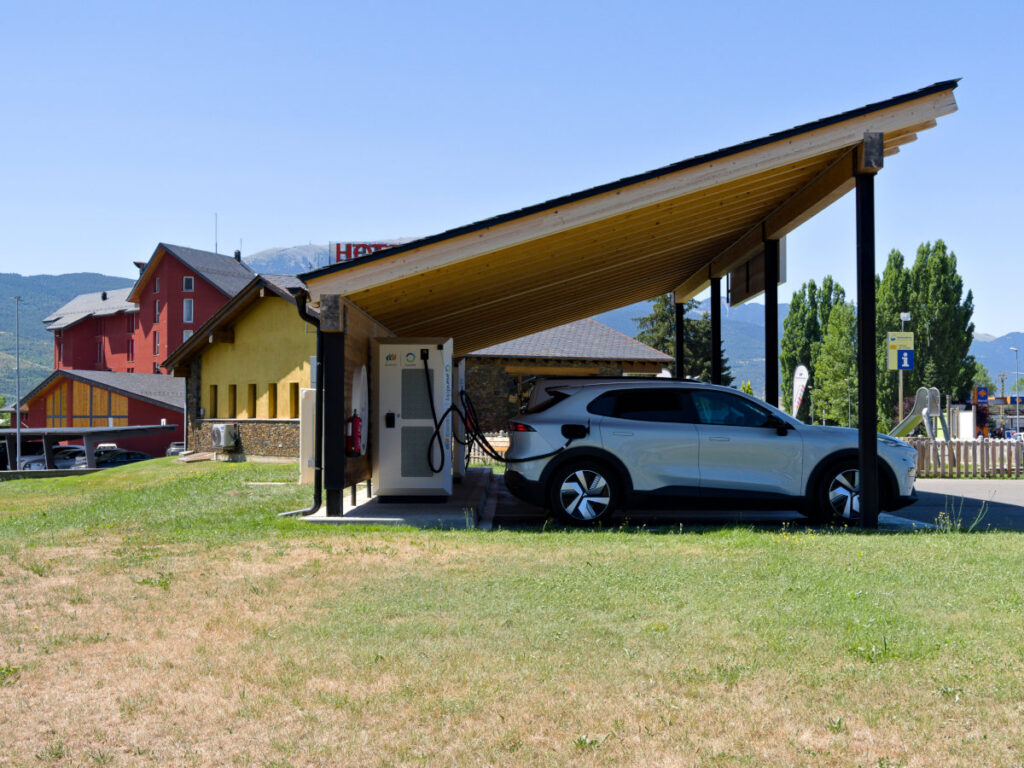
During two road trips (two weeks and one week long) on an EV in Europe in July this year, I noticed that new charging stations are popping up so quickly that map applications focused on keeping track of chargers are not keeping up with the pace. In Portugal, I was leaving a town that didn’t have a working high-speed charger when a petrol station that had shiny new metal totem poles next to the road caught my eye. And these chargers were working. It wasn’t the only time we spotted unmapped power sources, but some of them were so new they were not even connected to the grid yet.
Perhaps it was the fault of the map app I was using that I missed charging stations? I checked a couple of other charger map apps, and sure, there are differences between them. Now, I am using two apps: Openchargemap and Electromaps. Sometimes a charging station is missing from the Openchargemap and other times from the Electromaps, but rarely from both.
Are there any statistics to prove my notion that new charging stations are popping up in Europe like mushrooms in the autumn? Sure, Gridx, an enterprise that develops energy management systems for chargers, has published Charging Report 2026 with plenty of statistics on the charging infrastructure. It covers EU countries and Switzerland, Liechtenstein, Norway, Iceland, and the UK.
The total number of chargers in 32 European countries at the end of 2025 was 1.2 million according to the Gridx report. The increase from previous year was 19.1%. In recent years, the development has been fast because five times more chargers stood along European roads in 2025 than in 2020.
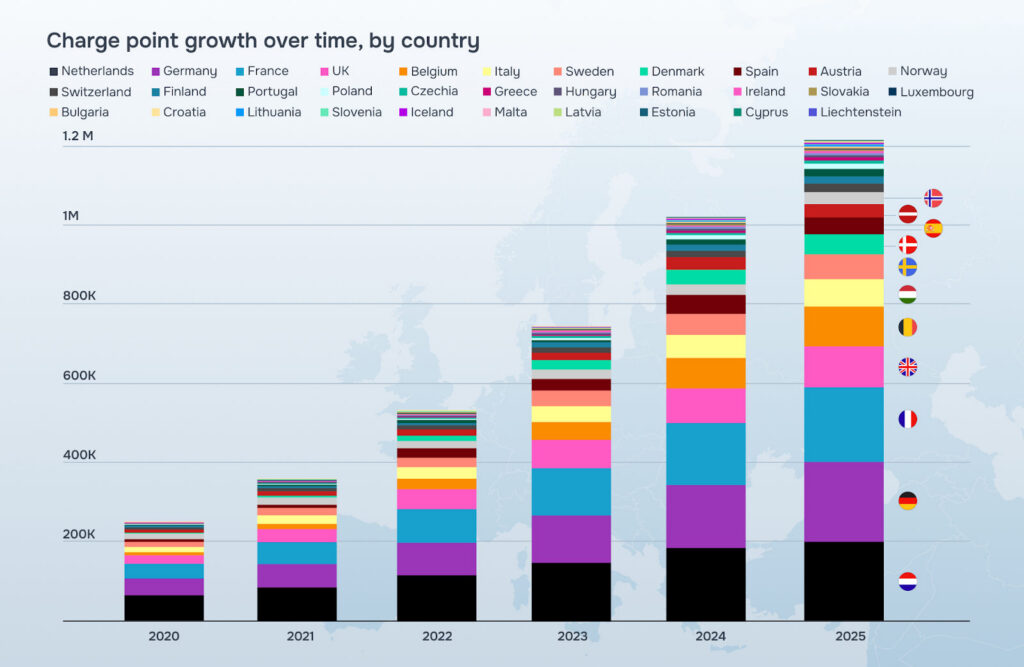
As one might expect the number of chargers per country varies wildly. The Netherlands has been the most active country to install public chargers (202 833 in 2025) for electric vehicles, Germany is the second (200 830), France third (186 717), and the UK fourth (103 580).
European countries greatly vary by size so it is only logical that a large country with plenty of residents would have the most chargers. The density of chargers, however, is high in smaller countries: Netherlands, Belgium and Denmark have the highest density of chargers.
Another notion from the July 2026 road trips was that plenty of new EV drivers appeared, especially, at busy highway charging stations. Many of them didn’t have a clue how to charge their vehicle battery. Accessing a public, commercial high-power charger for the first-time really is something else than plugging in the cable to the car from the home charger. These first-timers had one simple question to me: how do you charge? Often, they had tried to initiate charging with an app or their normal credit/debit payment card. I explained that the easiest way to get electrons flowing to the vehicle battery is to use a dedicated RFID charging card. They had never heard about charging cards.
But yes, RFID card is much, much easier than a charging app. Yes, RFID card is easier than a normal payment card (if a credit/debit card is an option at all). Plugsurfing and Chargemap are examples of RFID cards that are compatible with many charger brands (in Europe, at least), but naturally, there are more RFID cards to choose from.
Sure enough, there are statistics that support my notion about new EV drivers as well. The numbers from the first half of 2026 (January-June) indicate that registration of battery powered electric vehicles (BEV) hit 1.2 million during the six months of 2026 in Europe. It is a new half year record with 33.7% growth from the previous year. Cleantechnica reports details on EV models that are leading the sales in 2026.
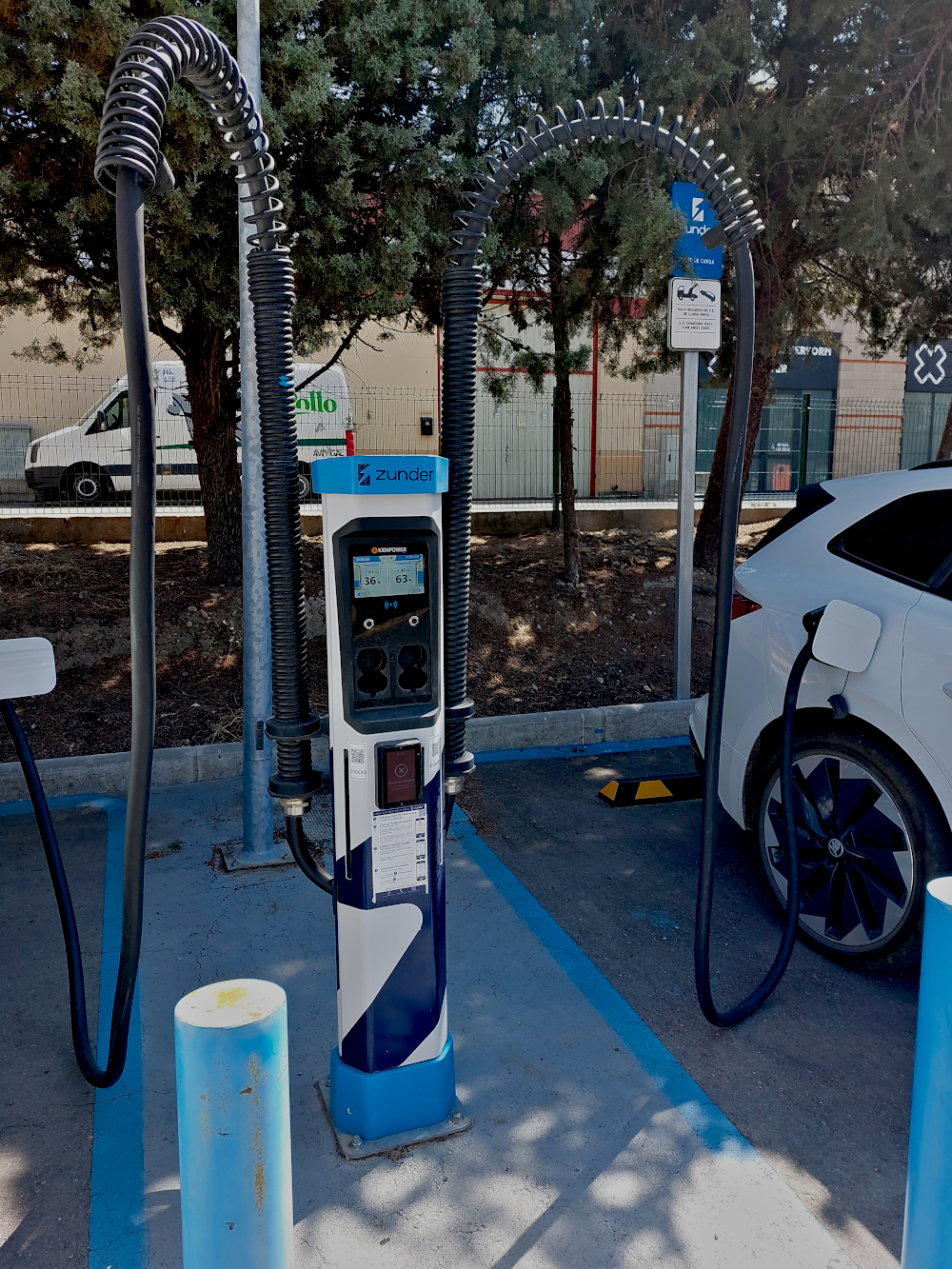
Are we approaching such times in Europe when a charger you intended to use is reserved, and you have to wait? It happened already to me in July. A town along one of the major highways in Spain, A3 had two functioning high-speed chargers according to the map apps. I visited both, and both were busy. After a chat with drivers who were charging, I decided to move on because the minimum wait was 30 minutes. So, I explored my maps, and drove about 20 km to the next place with a high-speed charger. No one was there. Battery got its fresh energy and I got my hot coffee. An additional outcome from this episode was the idea of rerouting our journey for the day. A country road that started from the highway exit provided a shortcut to the destination. It was a nice, relaxing route with views to the countryside.
My key take-away from the problem of reserved chargers was this: July is a vacation month and during any public holiday or vacation period, chargers will be in high demand now and in the future along busy roads and highways. There will be more chargers, but there will also be more EV drivers. If you choose to plan your trip during high volume traffic days along busy highways, inevitably there will be charging stations where all the plugs are active. Choosing another time to travel, and another route are worthwhile options when planning a road trip.