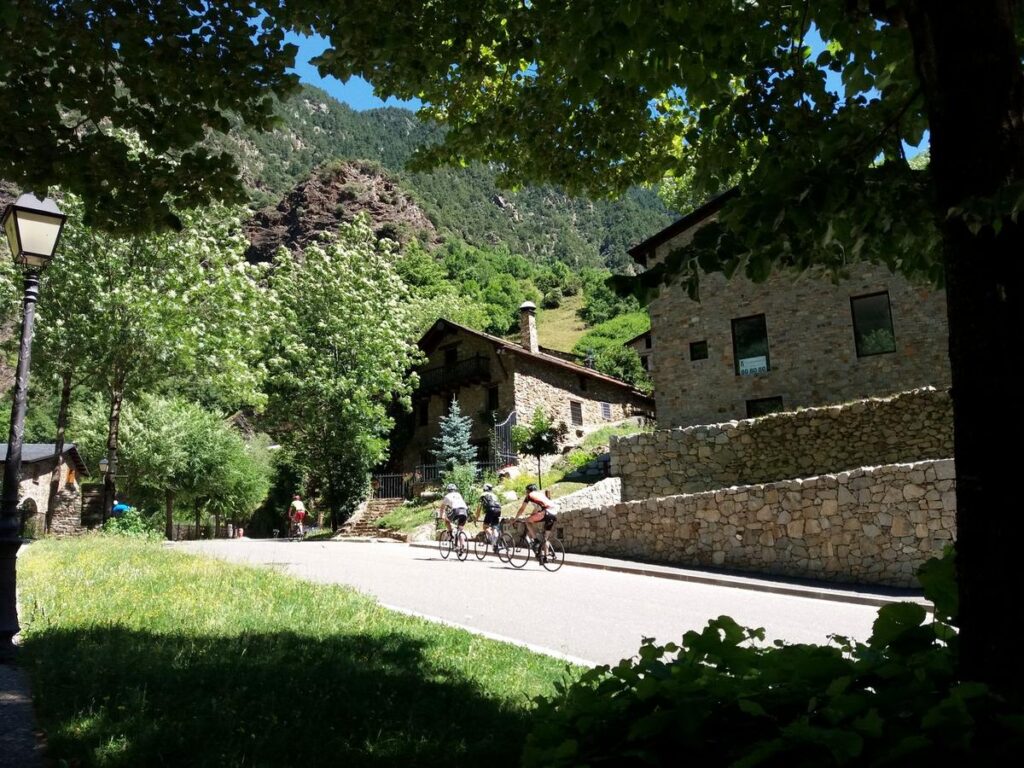
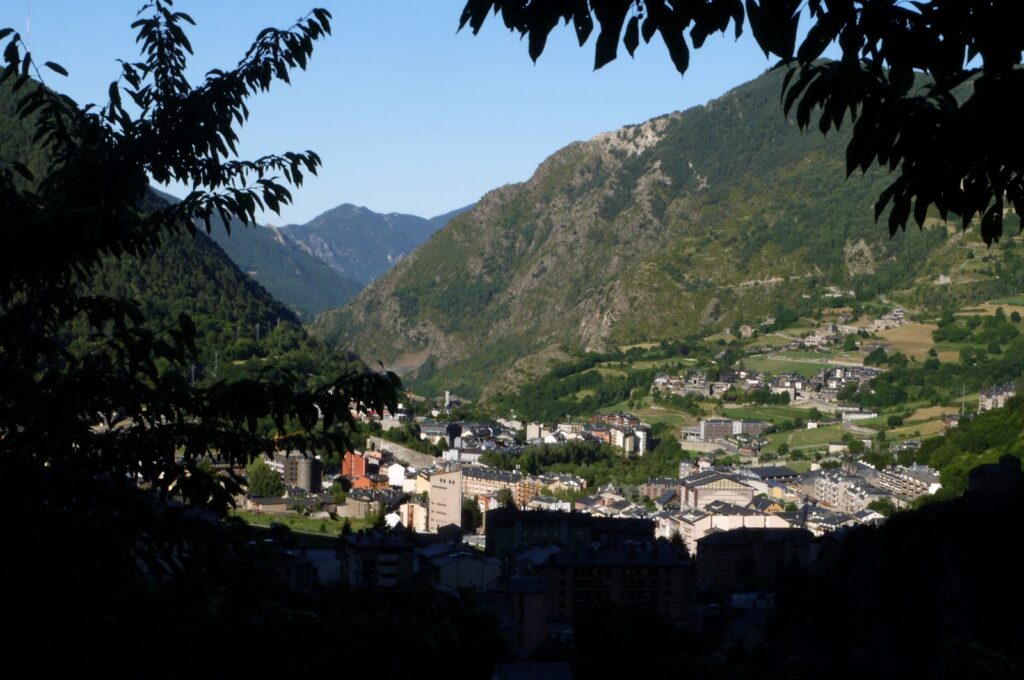
Andorra is located on the Pyrenees Mountains between France and Spain. I tend to think of it as a country whose territory has developed around a valuable valley that has connected south (the Iberian peninsula) and central Europe for ages.
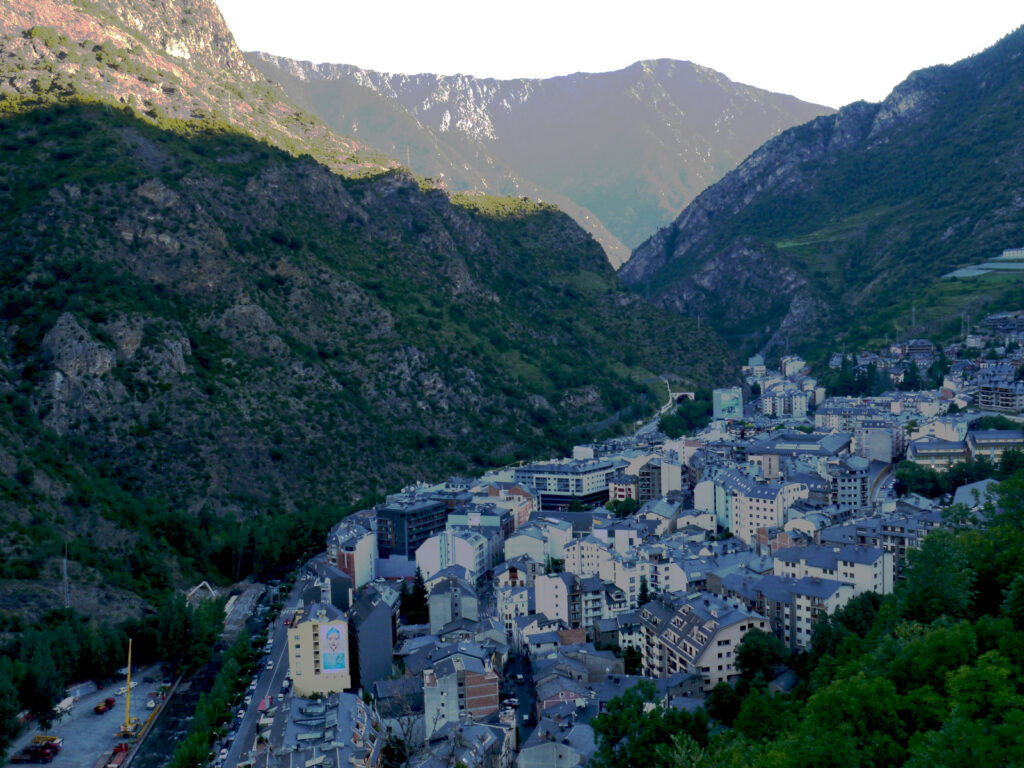
The capital Andorra La Vella at an altitude of 1023 meters is the highest capital in Europe. It is in the valley, just like a few towns such as Sant Julia de Loria and Encamp. Up from the valley towards mountain tops that rise close to 3000 meters you can find tiny villages and ski centers. The road in the valley – connecting France and Spain – is practically the only one in Andorra that is not a constantly winding mountain road.
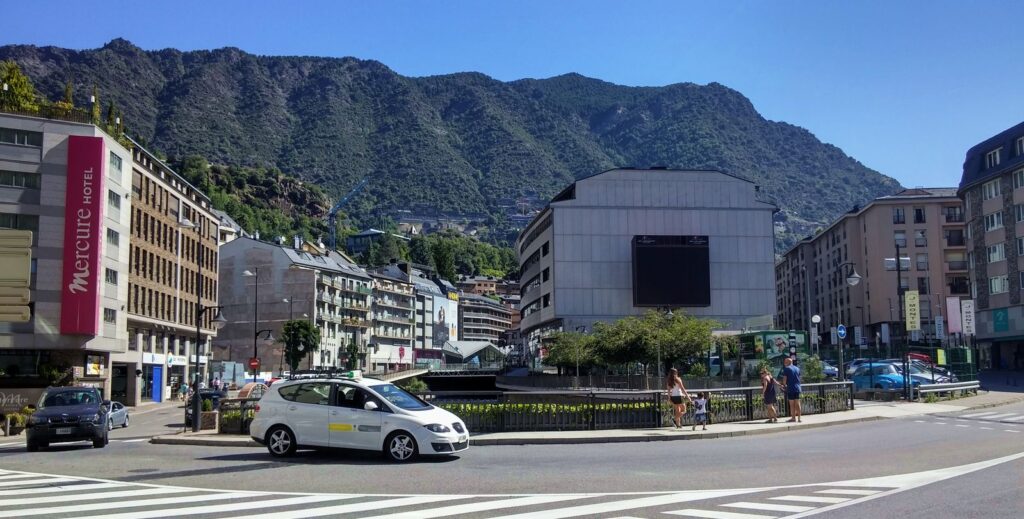
About 90 000 residents have their homes in Andorra. Half of them are estimated to be from neighbor countries.
I have visited Andorra multiple times, and have always thought it as a EU member state because borders are open when arriving from Spain or France, and the Euro is the official currency. But no, Andorra is not a EU member. Instead, Andorra has trade agreements, visa-free travel agreement, and even currency agreement that allow travelers come and go and enjoy using the same money as in Andorra’s neighbor countries and in many other European states.
In the winter, skiing is the thing to do in Andorra. There are multiple ski centers to choose from, for instance, ones with a cabin lift from the valley (Canillo, Sante Pere, Encamp), or a short drive away from the valley (such as La Massana, Arinsal). Summer, on the other hand, is a fabulous season for nature lovers, hikers, cyclists, photographers, and everyone who enjoys dramatic mountain scenery. A few ski lifts operate in the summer as well so you may enjoy a comfortable scenic journey up the mountain (and down as well).
Some Europeans may remember the times when the capital Andorra La Vella was renowned as a shopping destination, but times have changed. Nonetheless, the busy Andorra 2000 shopping center is still there in the city center if you want to visit it. There is a large carpark nearby along the main valley road where you can park for free if you have spent enough at Andorra 2000 (show your parking ticket at the cashier).
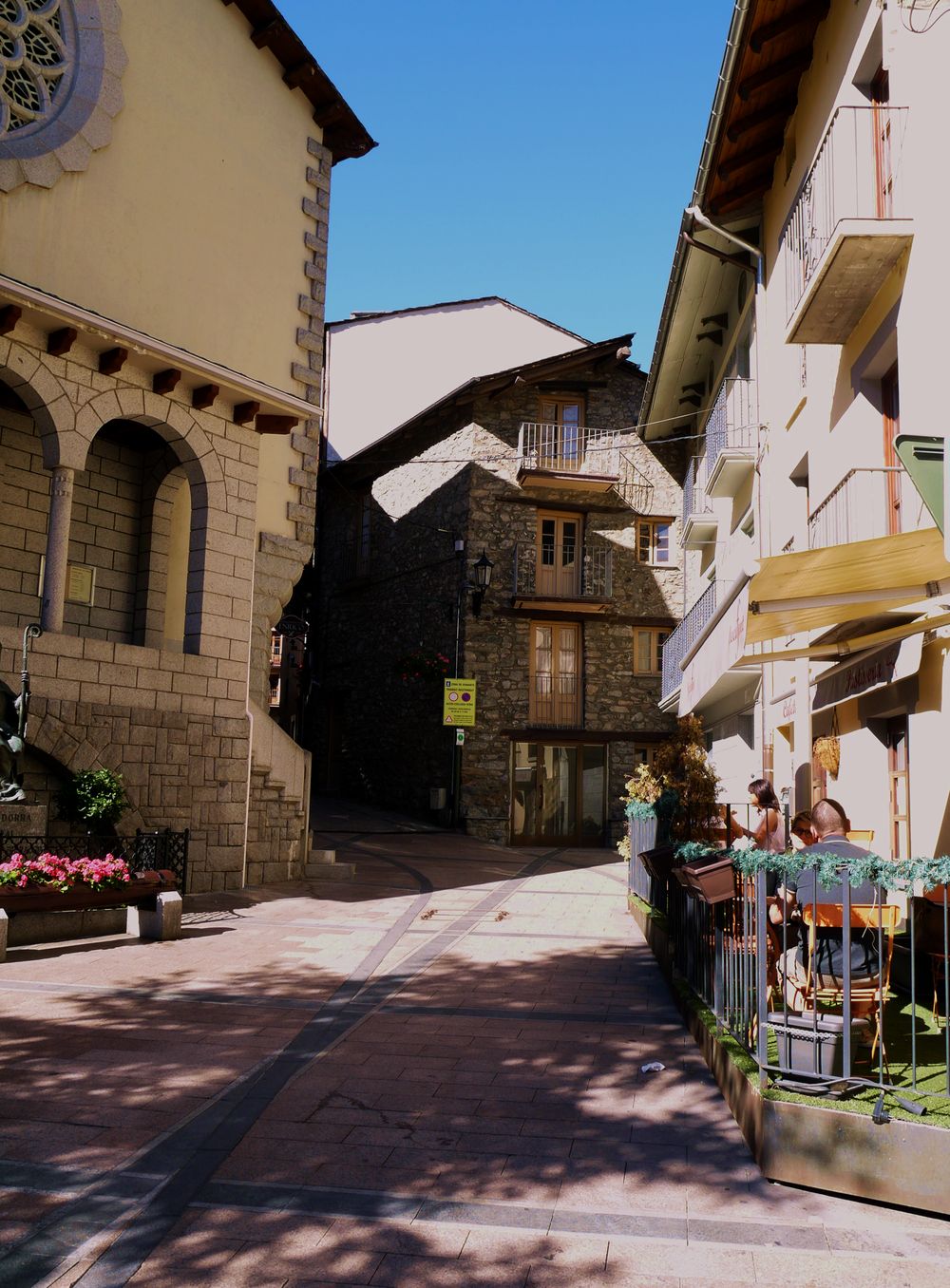
A small, idyllic old town center is worth exploring in the capital Andorra La Vella. Find the street Carrer Dr Vilanova, and you will discover the old town, and can pop in the tourist office as well.
Hiking trails start from many places in the valley, or you can drive up a mountain to start from a scenic location. Another way to admire the scenery is to take a ski lift up in a ski lift. In the valley town of Encamp, the Funicular gondola lift is in operation in the summer as well. It carries passengers all the way up to 2500 meters altitude.
I had been traveling quite a lot in France and Spain before my first visit to Andorra. Arriving from France, I approached the tunnel that allows drivers to shortcut the last kilometers of mountain road (later, I have driven the higher route and can recommend the views at the highest point Port d’Envalira 2402m). Before the tunnel a sign indicated I had entered the Andorra territory, and after that there was a booth for paying the tunnel section. My problem was that I didn’t have a clue which currency or language I should try with the cashier? Instead of French or Spanish, I decided to try English, and simply asked the lady in the booth which language they spoke in Andorra. I would have never guessed. The language in Andorra is Catalan. It is the same language as in Barcelona and in the province of Catalonia. Naturally, Spanish and French are widely spoken, and especially young Andorrans speak fluent English as well.
The only way to travel to Andorra is by car or by bus. Buses are available at the nearest airports: Toulouse in France and Lleida, Barcelona and Girona in Spain.
So, visitors arrive in Andorra by car and want to park in the city center. The best option is to look for a parking complex, and pay for the space you occupy. If you have booked a hotel room for your stay, the hotel may have its own parking facility.
For campervans the most practical way is to find a large outdoor carpark that have space for large vehicles. Finding overnight parking outside designated campervan parks or camp sites is difficult (there are a number of both).
The history of how Andorra was founded is rather unique. Signs of prehistoric settlements in the valley have been discovered, but the actual Principality of Andorra was formally agreed in 1278. The Count of Foix (in France) and the Archbishop of Urgell (in Spain) had been fighting over the ownership of the territory long enough, and decided to solve the problem by establishing a shared sovereignty for the country. They agreed to have two heads of the state – one from each side – to rule the Principality of Andorra. That is the way it still is. The only difference is that the President of France is the head of state instead of the Count of Foix, but still with the Archbishop of Urgell.