
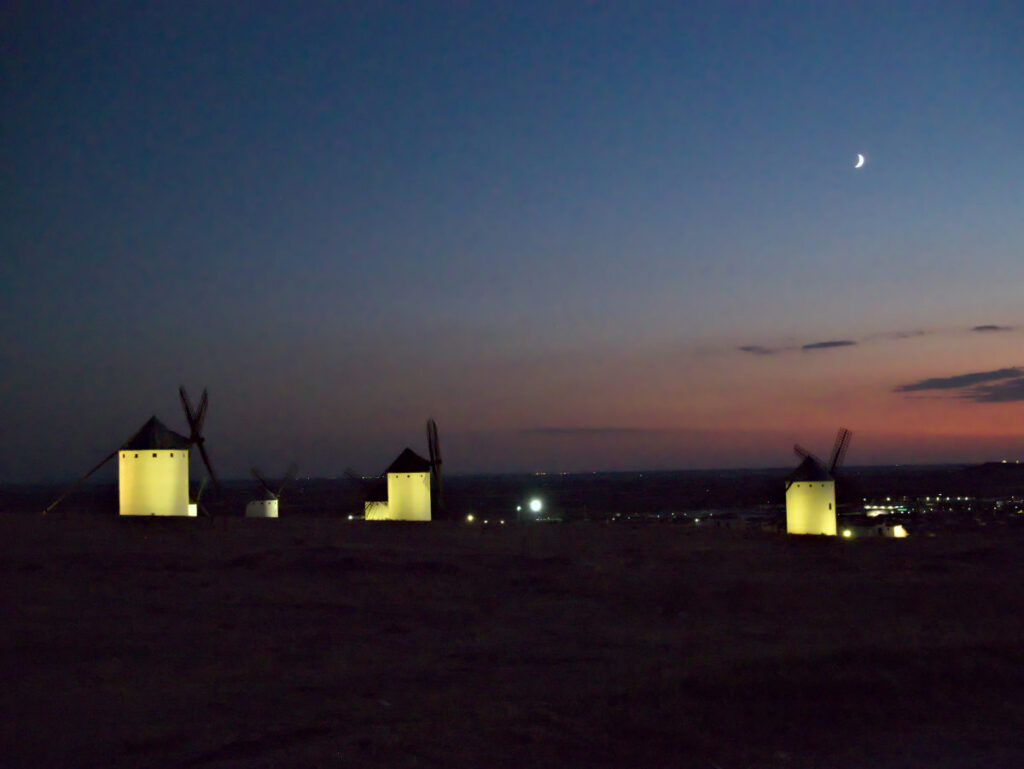
White windmills standing on a hill above a town in central Spain is an iconic sight. If the windmills alone are not enough to spark your desire to explore the region, perhaps the classic novel Don Quijote by Cervantes does it. In the book, the main character decides to fight the mills, but has to continue his journey without defeating them. I made a road trip to the region in Spain where the windmills attract tourists and some of the mills still run – after 500 years since construction – when the wind blows.
The region of historic windmills can be visited about 150 km southeast from Madrid in the province of Castilla la Mancha. Nearly every village and town in the region announce that it is the authentic Don Quijote village, but not every settlement has ancient windmills to match the stories of the novel.
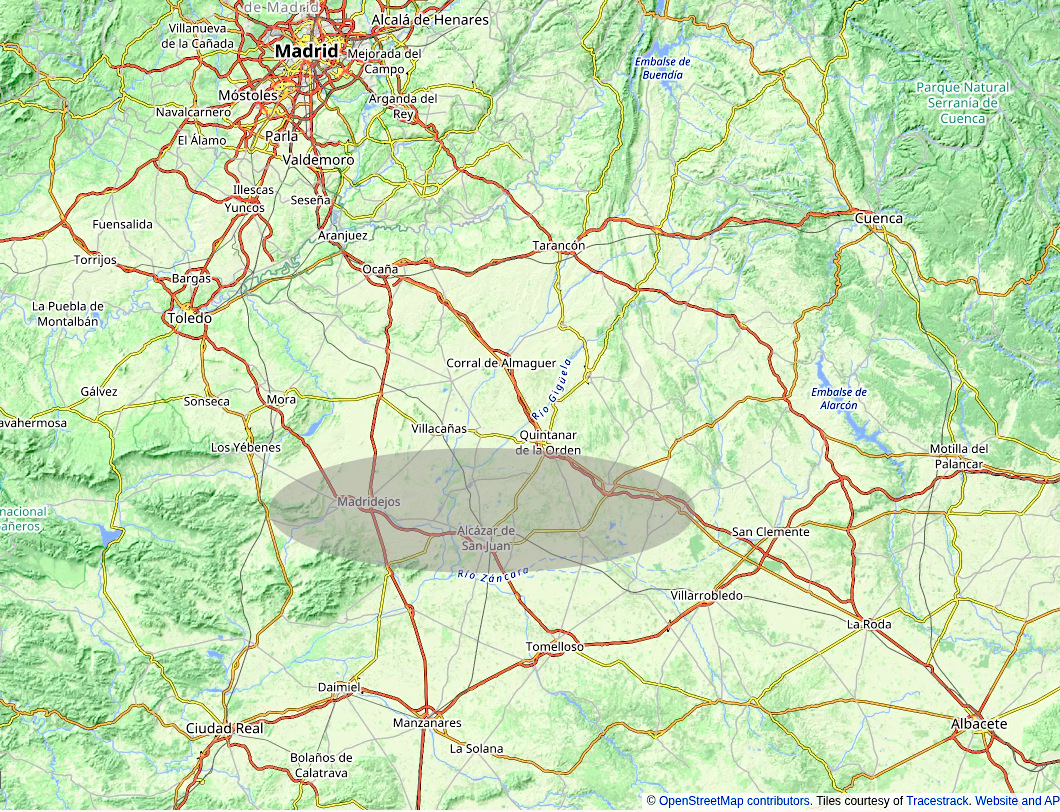
I visited the towns of Belmonte, Campo de Criptana, Consuegra, Mota del Cuervo, and a few more, but the windmills in the mentioned locations were my favorites. For more towns and villages to explore in the region, the tourist office provides tips here.
Mota del Cuervo
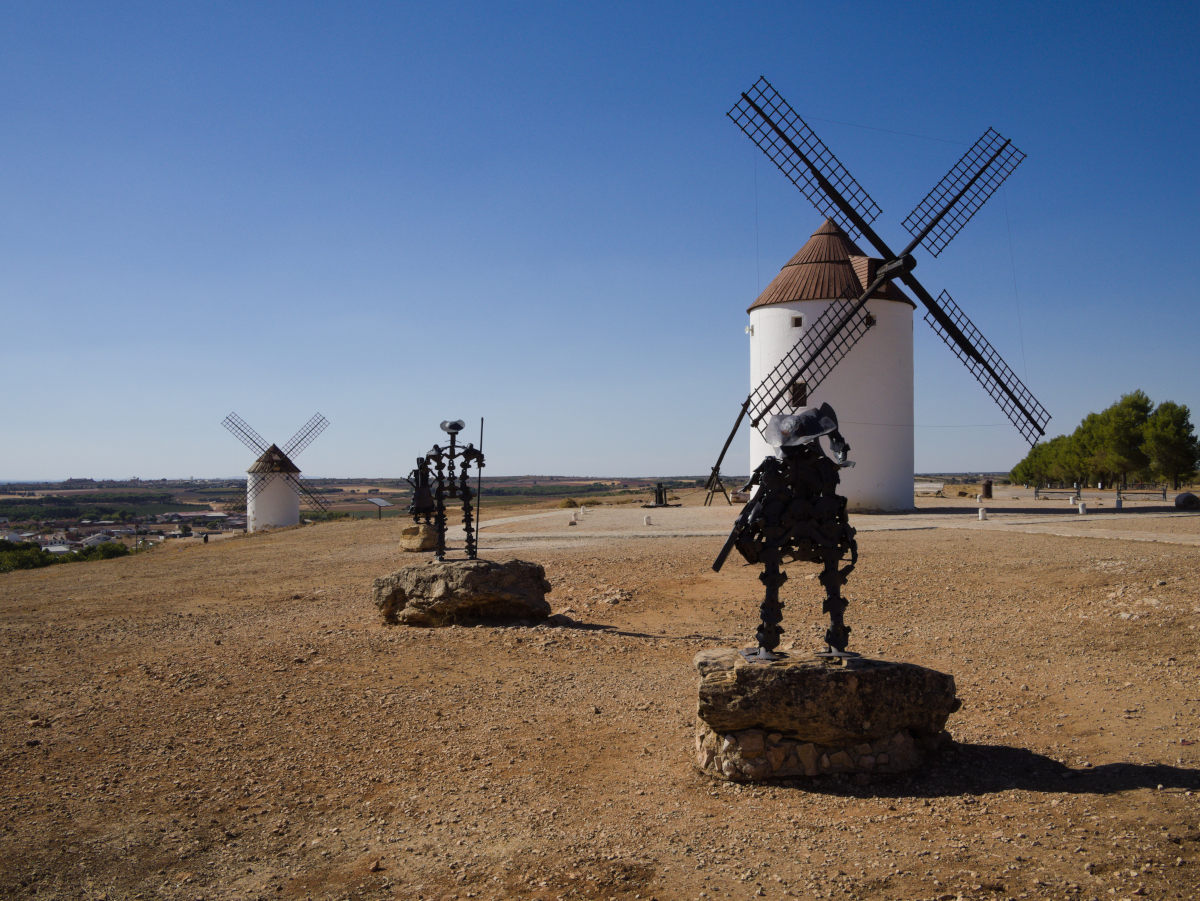
The first written proof of windmills in Mota del Cuervo is from 1603, but historians agree that mills had already been running for years before that date. In the 19th century about 20 windmills stood on a hill where visitors can explore seven mills remaining today. The largest one, El Gigante features a tourist information office and in the second floor, an actual grinding mechanism that produced flour.
Consuegra
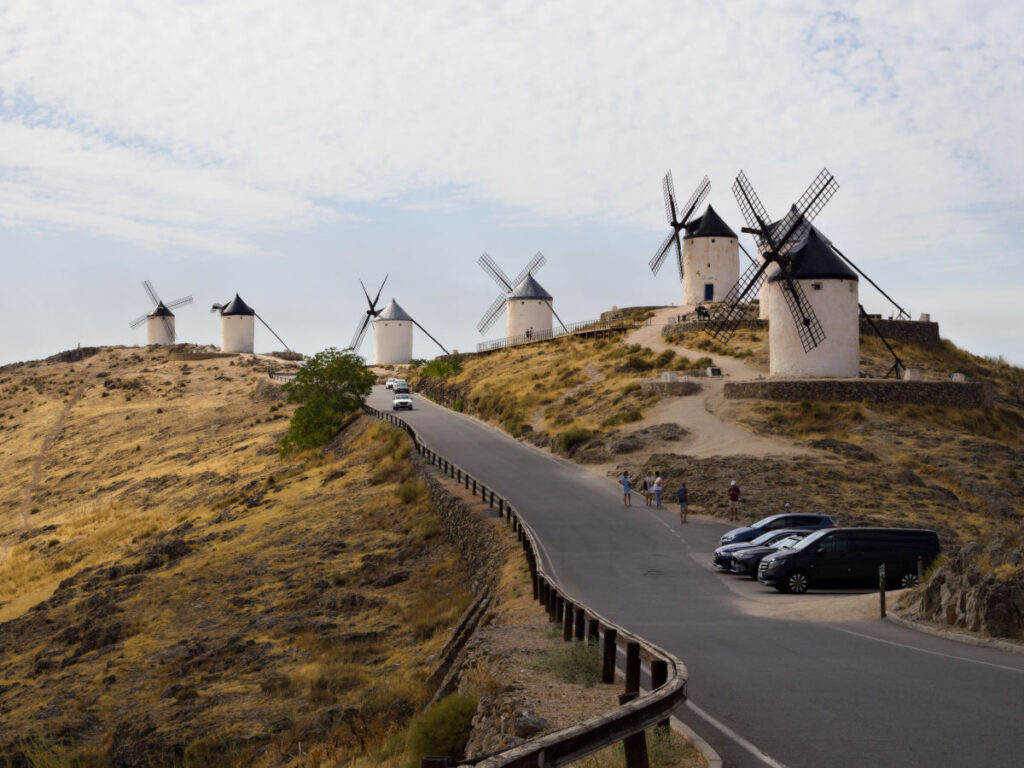
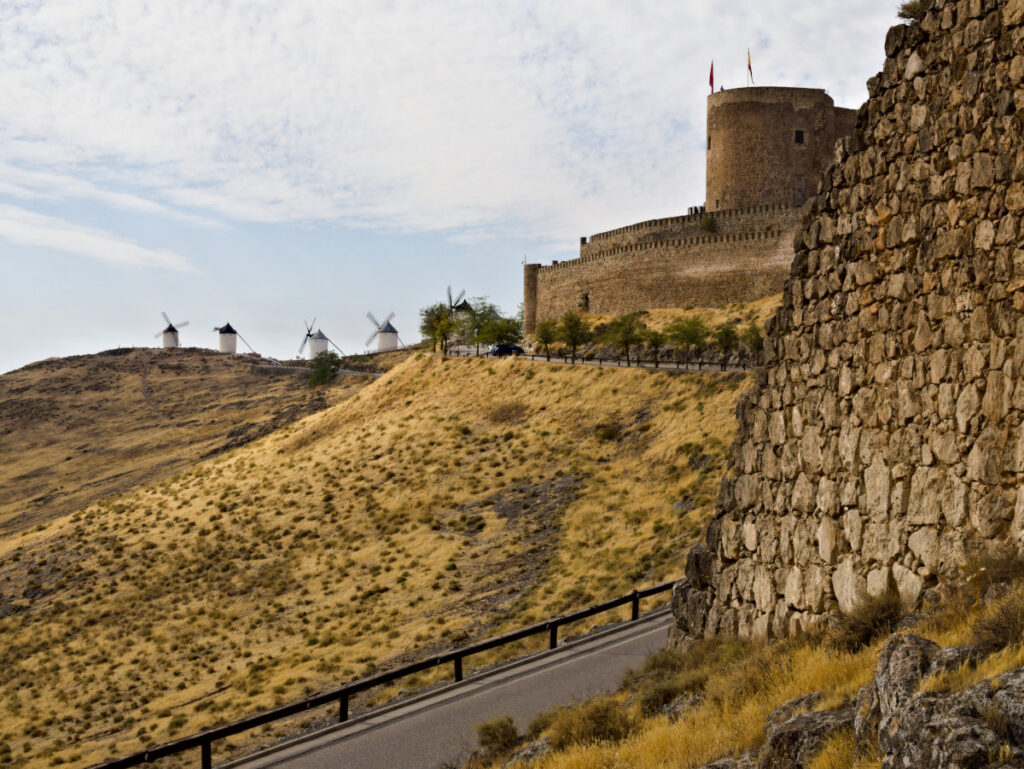
Consuegra attracts more tourists than any other windmill town I visited but it was still a pleasant destination to explore. Large tourist crowds in Spain tend to concentrate in Madrid and the Mediterranean coast, whereas Castilla la Mancha is located between these popular destinations.
The castle of Consuegra on the same hill as the windmills was originally built by Arabs in the 10th century, and it was later modified and enhanced. Windmills are from the 16th century. Molino Sancho has the original mill grinding mechanism at display.
Campo de Criptana
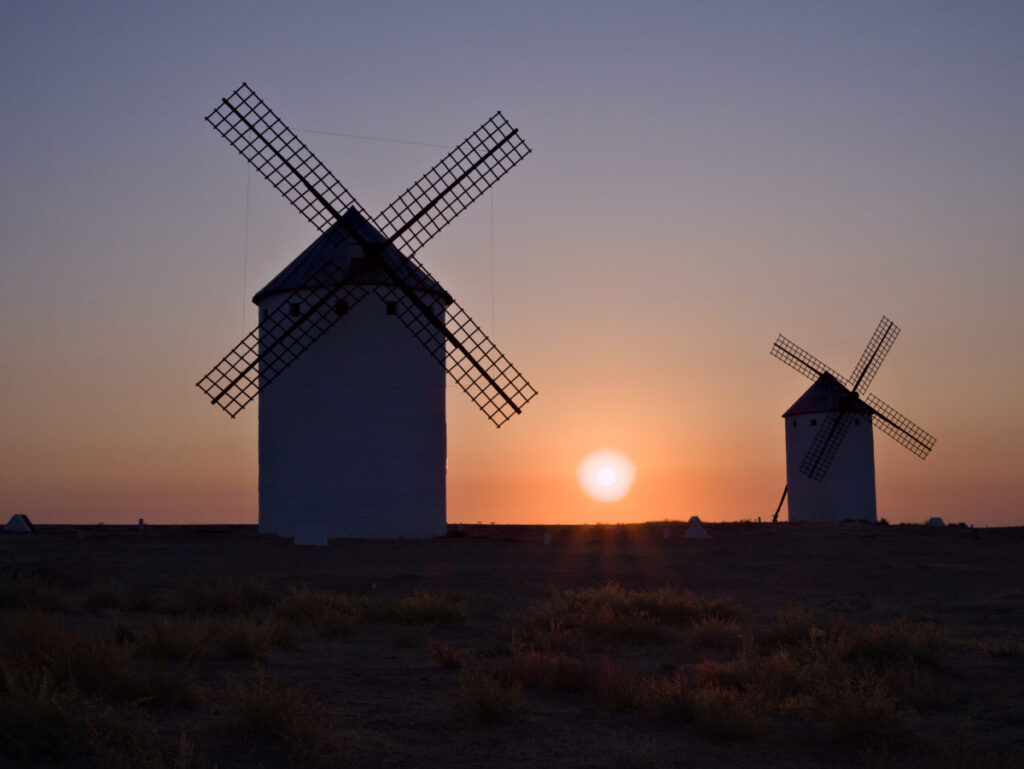
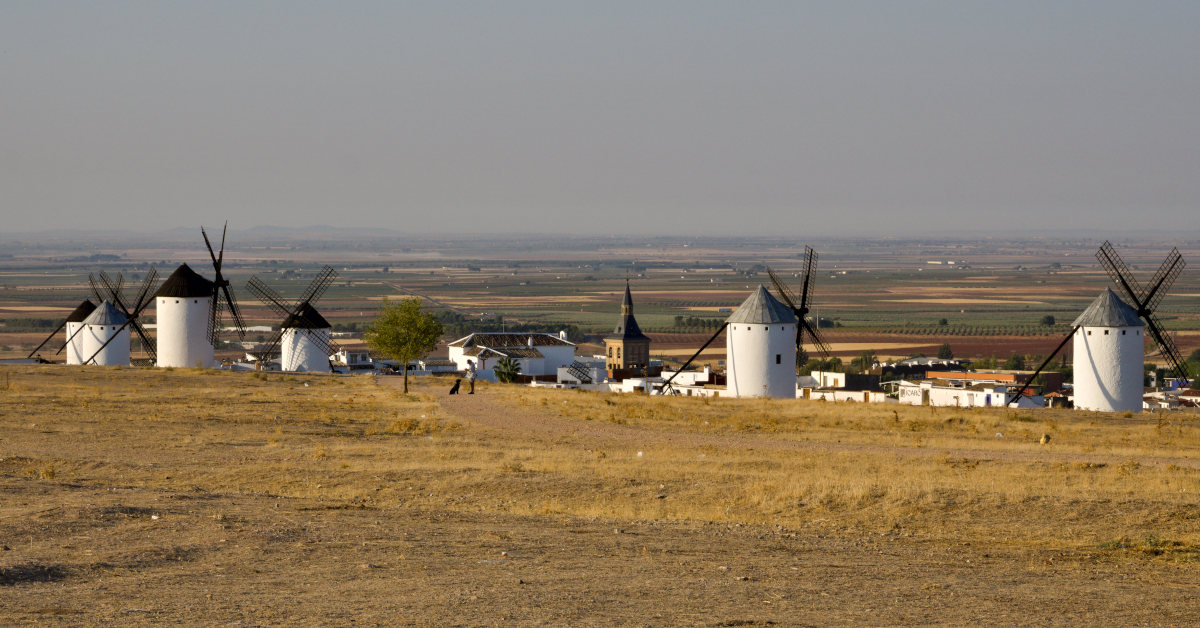
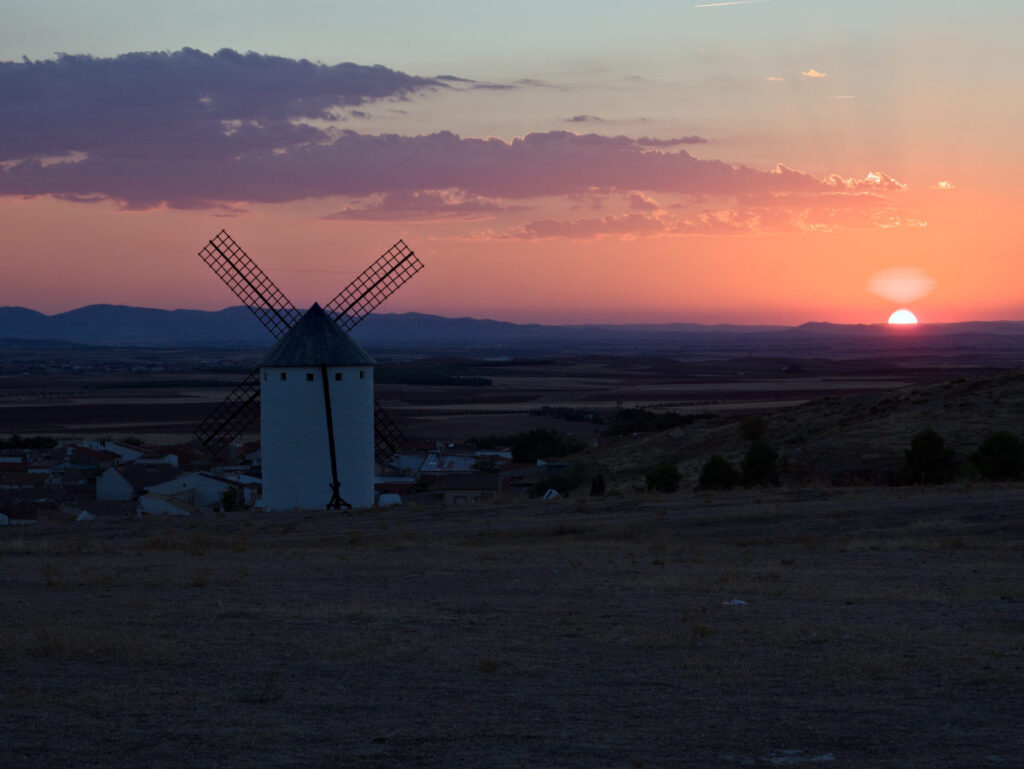
A scenic view over the 10 windmills of Campo of Criptana opens up when you walk or drive a gravel road above the mills. A couple of windmills are in the gardens of private houses, but others on the hill are in an area where residents walk their dogs and come to admire the sunset. In 1752, altogether 34 windmills ground flour on the hill. Out of 10 windmills that exist today three are originally from the 16th century, others have been constructed later.
Belmonte
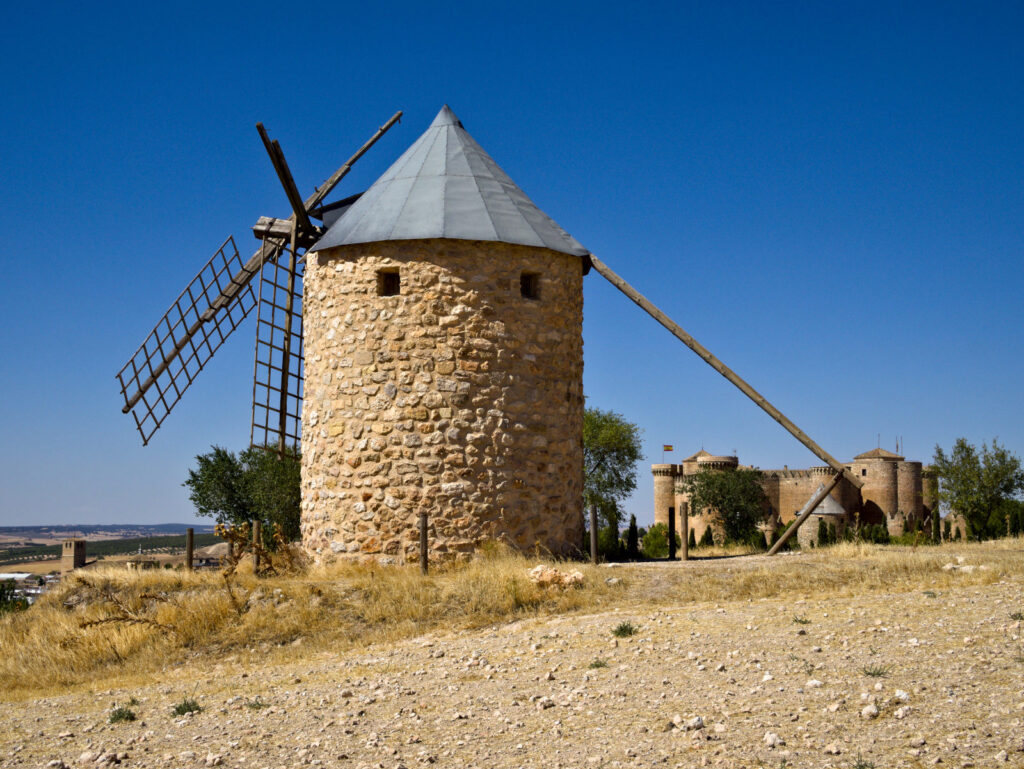
The pretty castle of Belmonte was built by the Marquis of Villena. The construction work started in 1456. The windmills near the castle were built in the 16th century. Once a year the town celebrates a fiesta where medieval fights are conducted inside the castle walls.
Don Quijote by Miguel de Cervantes was published in two parts in 1605 and 1615.
The plain landscape at an altitude of 600-800 meters in Castilla La Mancha has few surprises apart from the windmills. Here and there hills rise from the land that is practically everywhere dedicated to agriculture. Wind is always a factor in the plains, which in the summer means welcomed fresh air to ease the heat, but during winter the wind boosts the bite of cold. So, consider your clothing when you visit.