

For a few years, residents in the most popular tourist destinations in Europe have been complaining about crowds, especially during the peak vacation seasons, that take over their streets, restaurants and many apartments as well. While residents’ concern is real, where do Europeans themselves travel when they want to enjoy a week-long break?
Eurostat has collected statistics that indicate where residents of EU countries spend most of their nights when they travel to another EU country (just a reminder that the European Union comprises 27 countries and the continent of Europe 44 countries).
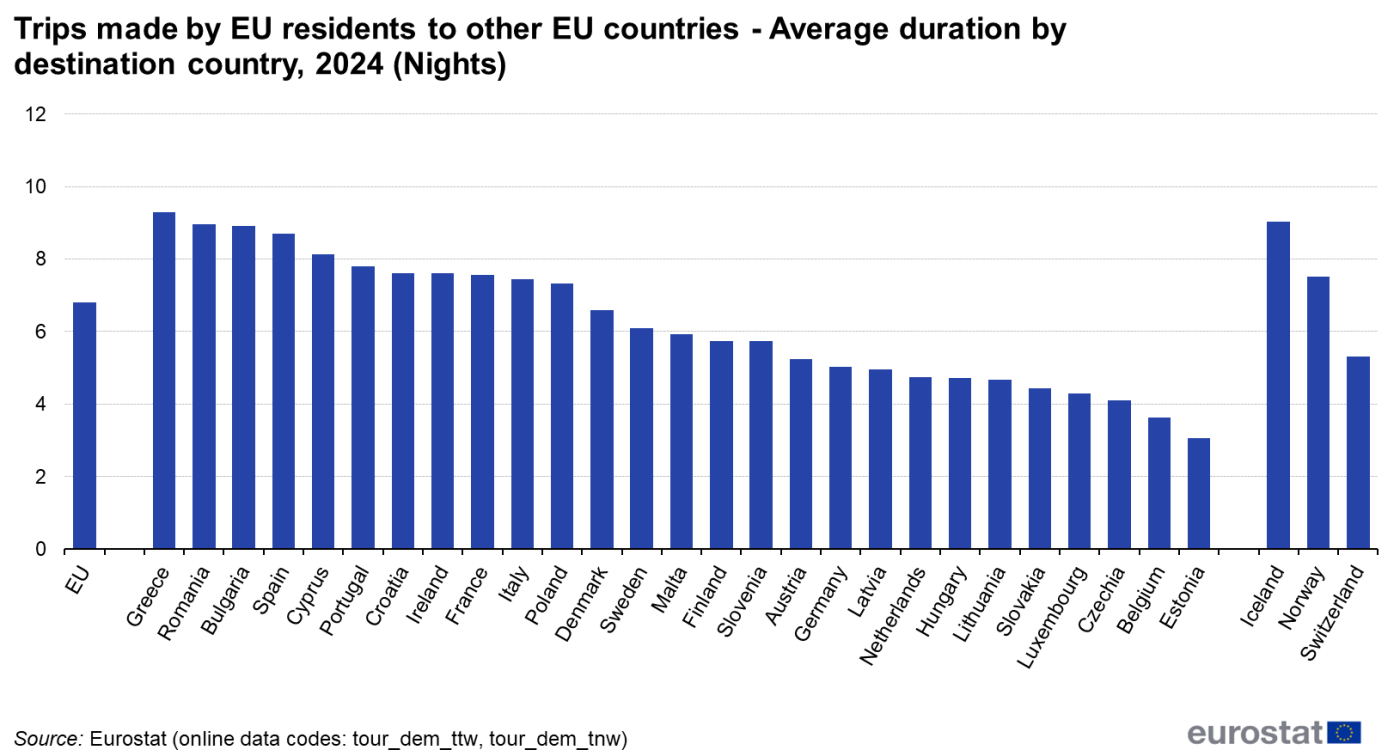
For one week or longer overseas travel, EU residents on average liked to stay in 2024 in the following EU countries:
- Greece
- Romania
- Bulgaria
- Spain
- Cyprus
- Portugal
- Croatia
- Ireland
- France
- Italy
- Poland
The statistics doesn’t directly measure any country’s popularity as a travel destination, but indicates where Europeans like to stay longer than a long weekend. The average length of stay in other EU countries varied between 3 and 6 nights.
Residents in popular tourist destinations argue that short term tourist accommodation in residential houses available on online services such as Airbnb and Booking are making life more difficult and expensive in their cities. But where do EU residents themselves stay when they travel? Let’s take a look at types of accommodation EU residents used in 2024 when they traveled in Europe.
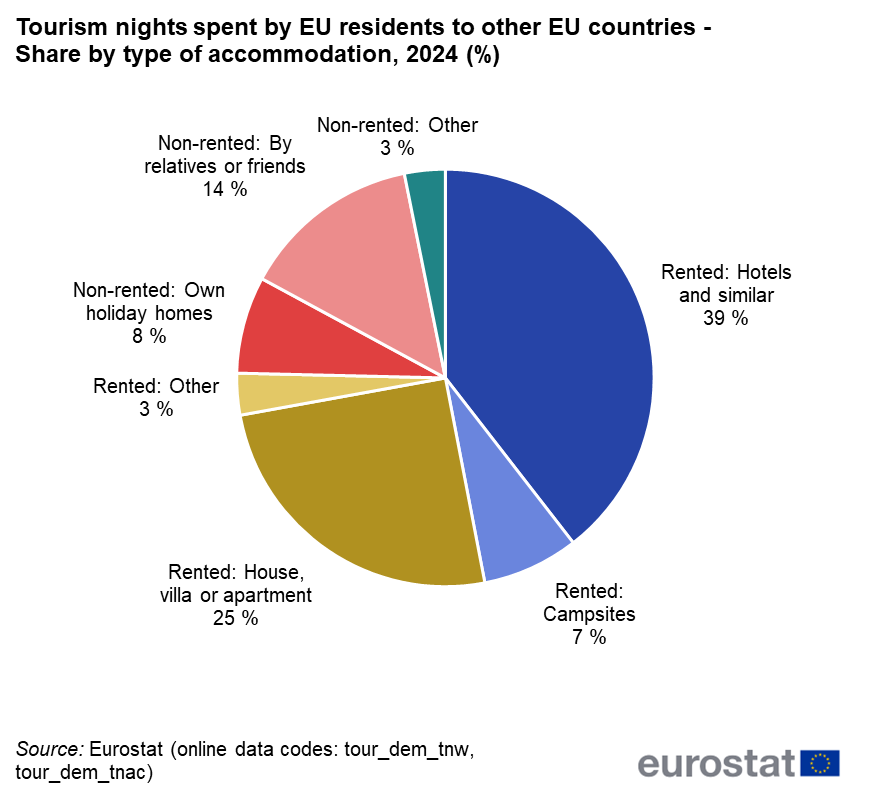
- 39% of nights in hotels or in similar type of accommodation
- 25% of nights in rented villa or apartment
- 14% relatives or friends
- 8% own holiday home
- 7% campsite
- 3% other type of rental and 3% other type of accommodation
One in four travel nights were spent in houses or apartments that originally were designed and built for residents, but during the last few years these homes have been converted into short term tourist rental use. It looks like the concern of residents who happen to live in popular tourist destinations is real – tourism is changing their neighborhood and life.