

After the difficult period of worldwide pandemia, tourists are on the road again. In 2025, the world traveled more than the year before pandemia. Where did tourists go? Which regions lost visitors, and which ones welcomed more travelers? Here are the statistics for 2025 and a few trends for 2026.
The UN Tourism organization has tallied up statistics for international tourist arrivals (which here means overnight visitors) across the world. 1.52 billion visits were recorded in 2025 across the world, indicating 4% growth from 2024.
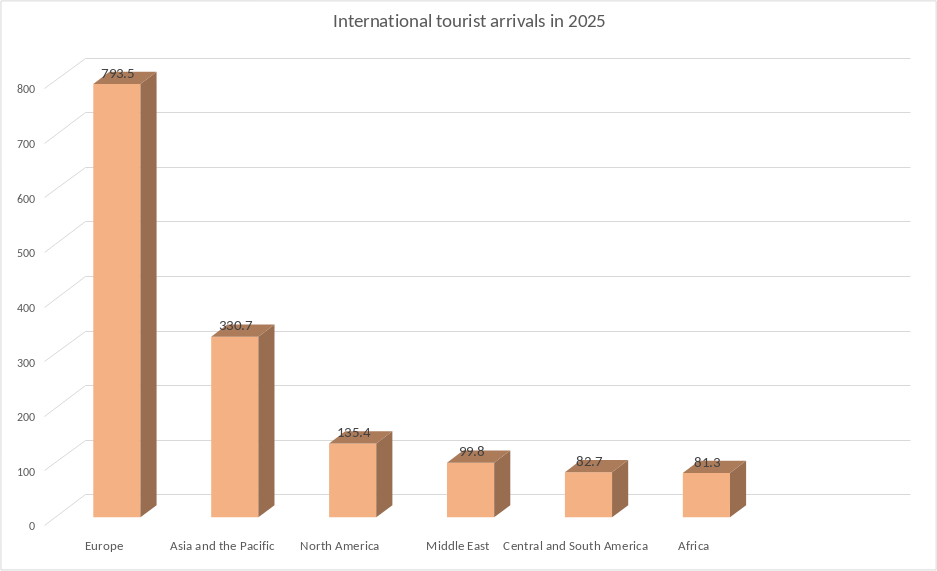
- Europe continues to attract the majority of tourists in the world: 52% of all tourist trips (793.5 million) were made to Europe in 2025.
- Asia and the Pacific region was the destination for 22% of trips (330.7 million).
- North America: 135.4 million tourist arrivals.
- Middle East: 99.8 million arrivals.
- Central and South America: 82.7 million arrivals.
- Africa: 81.3 million arrivals.
Travelers visited the following regions in Europe:
- 341.6 million trips to the Southern and Mediterranean Europe
- 226.3 million to the Western Europe
- 139.6 million to the Central and Eastern Europe
- 85.9 million to the Northern Europe
Is it possible to identify any trending travel regions, or continents that are losing travelers?
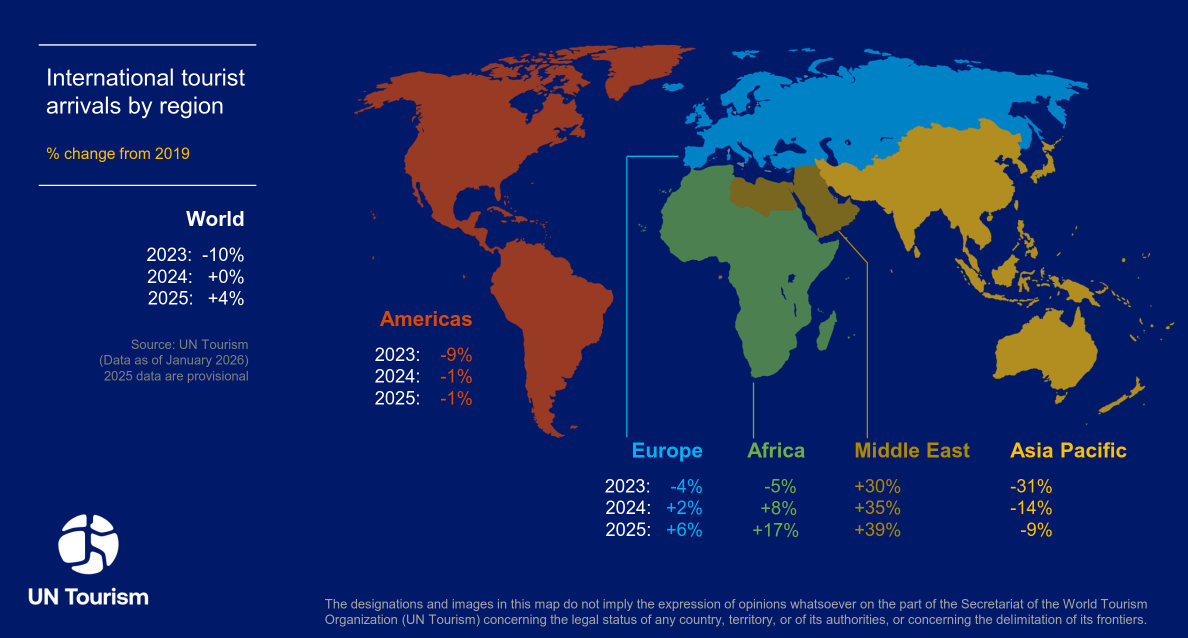
Comparing numbers for tourist visits from 2019 and 2025, the biggest winners (in relative terms) are the Middle East countries and Africa. Middle East has gained 39% more visitors since 2019, and Africa 17% more tourists than before the pandemic.
Asia Pacific region is still behind the tourism numbers it had before the pandemia, although it is continuously getting more visitors. North America’s international tourism has taken an interesting turn: after a couple of years of gradual recovery from the pandemic, visitor numbers to North America have suddenly fallen in 2025.