
European Automobile Manufacturers’ Association has tallied up car sales numbers for the year 2025 so far (January – August). The growth trend for electric vehicles continues. The sales of fully battery-powered and hybrid cars are growing strongly, whereas diesel and petrol cars are running out of fuel. Volkswagen and BYD are the biggest EV market share winners in 2025 so far, and Tesla the biggest loser.
If you always wanted a van that can drive autonomously, the time for it may be closer than you think. Stellantis has partnered with Pony.ai, a company whose system is already used in driverless taxis in Chinese cities. Safety regulations in European countries are likely to require thorough street testing for the Peugeot E-Traveler, so let’s see how it goes in 2026.
Comparing road trip experiences between diesel and electric vans
There was a learning curve when I got my first campervan powered by diesel engine, and there was another learning curve for enjoyable road trips in the electric van, but after the latter learning curve was done, the winner van for road trips was easy to nominate.
Essential statistics on the number of EVs and charging facilities in Europe
Statistics on the number of electric vehicles and charging stations in a country gives you a picture of the development of infrastructure for EVs. These statistics cover only UK, Central and Southwest Europe, but it is a good start. While statistics can be interesting, when planning an EV road trip in Europe, examine carefully the regions where you intend to be driving in your charging map app to get an idea what to expect.
Who needs a sauna in electric van?
People who have hobbies like swimming in cold waters in the wilderness might appreciate a comfortable way to warm up after the exercise. To celebrate the 60th year of the Ford Transit van, Ford commissioned a company specialized in van conversions to build a sauna into a E-Transit. The infrared heating system draws power from the van’s batterypack. The sauna takes the entire cargo space of the vehicle, so using it as a campervan isn’t really an option after conversion.
Turning city street lampposts into EV chargers sounds like a good idea, but what is holding it back?
The capital of Czech Republic, Prague, has started a project for installing EV chargers into street lampposts. By 2026, the city plans to have 1500 lamppost chargers ready, and the deployment will continue from there. The project is relatively slow and costly because the city is installing thicker cables into each lamppost for the chargers. This is the reason that has held back lamppost installations in the UK, at least. The latest news is, however, that with careful planning and limiting the number of chargers rewiring can be avoided in some cases.
Maybe that out-of-order charger was targeted by copper thieves last night?
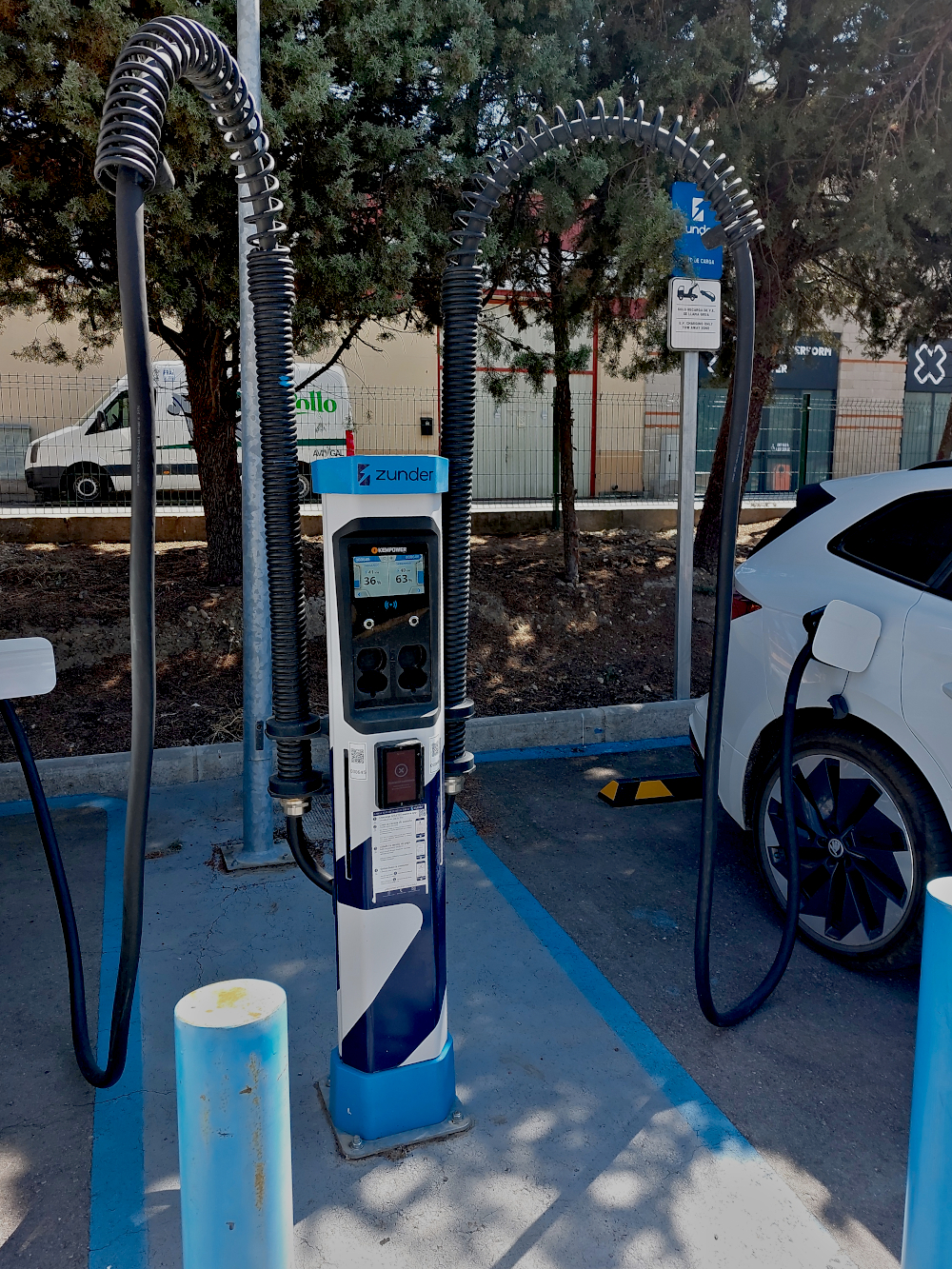
I knew that public car chargers, especially the high-speed, high-power ones, are very expensive high-tech machines, but it was a surprise to me that they include so much valuable materials that thieves try to cut off charging cables for the copper. This is one reason why we will notice more security cameras around charging stations in the future. Some charging operators have also started installing GPS trackers into the cables so that they can follow the cable if it decides to take a hike from its fixed location at the station.