
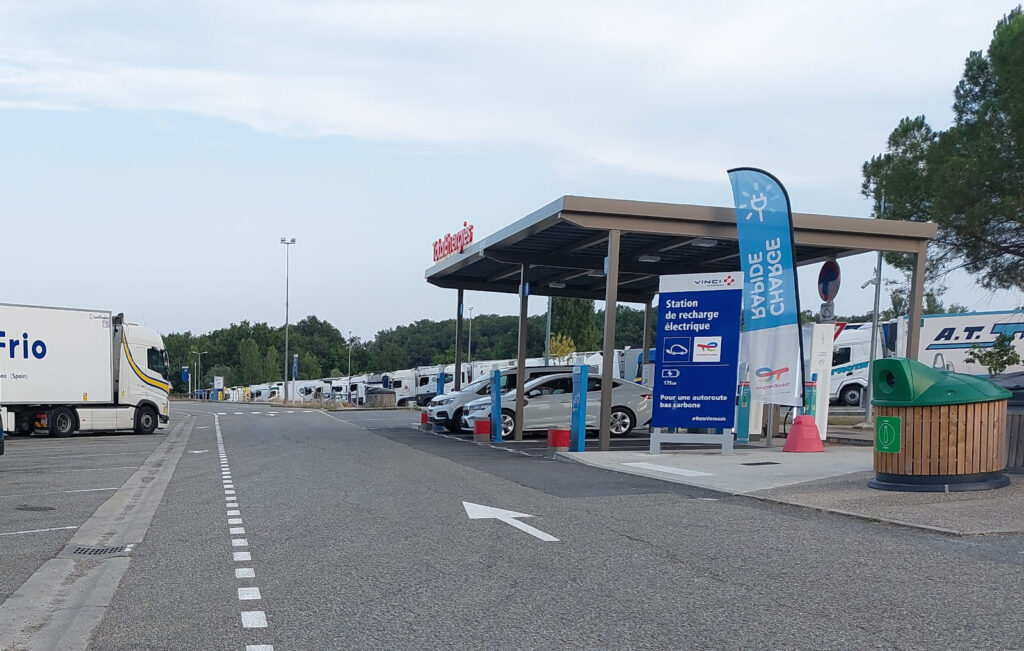
I traded my trusty old campervan powered by diesel engine to a modern electric van about a year ago. Since then, it looks like our road trips have become more frequent. We have completed multiple overnight journeys, and three long (a week or longer, up to 3500 km in Europe) trips in the electric vehicle, which is more than we used to do earlier. Is the electric van the reason for the increased travel? I wasn’t sure, so I decided to list the pros and cons of road trips in an electric van.
If you have chosen electric as well, your experiences may differ from mine. Vans are different, charging infrastructure varies from region to region, and how and where we drive has an impact on our electric vehicle experience.
The good
Driving is easy, comfortable, and more quiet than in a traditional combustion engine vehicle.
Energy cost is lower than in petrol powered cars. For instance, the cost of electricity on a 2200 km trip was 90 euros vs. 220 euros for similar trip in a diesel van one year earlier.
Acceleration, especially, from low speeds is phenomenal.
Charging the battery enforces the driver to have breaks – I consider this a safety feature.
You can have the heater or air-conditioning running even when standing still – without worrying about polluting the environment or causing extra noise.
Another nice feature heaters and air-conditioners in EVs is that the impact is almost instant when you turn on.
Driving in urban areas and up-and-down country roads allows extra mileage because the battery automatically charges when you brake or let go of the gas pedal.
You can drive into city zones that restrict access for cars running on petrol.
The bad
Occasional non-functioning chargers waste your time and may frustrate drivers who are in a hurry. The safest option is to plan ahead so that you can find another charger nearby.
Depending on your vehicle, its battery capacity, and your driving habits, charging breaks may increase your travel time, especially if you haven’t planned your breaks ahead. We are trying the have our coffee, toilet, and snack breaks at the same time when the battery needs more juice.
Motorways consume battery energy faster than other types of roads simply because we tend to drive fast and the battery doesn’t get free top-up as it does in cities. The difference to driving in a city can be up to 50% more energy consumed on motorways – naturally, depending on the speed.
Heating and air-conditioning increase the consumption of electricity from the battery. Heating is more power-hungry than airconditioning.
Tips
For road trips, especially for international journeys, do your research in advance which charging networks have the widest coverage along your route. For instance, Ionity is investing in its charging network in Central Europe, and Totalenergies in Central and Southern Europe, but there are many others that are entering the market at the moment. Each country tends to have its homegrown charging networks as well. Charging maps, like the openchargemap.org are an easy way to study which chargers are common in regions you are planning to visit.
I have found charging cards easy and reliable to use for charging instead of phone apps. At the moment, I have three RFID cards. Each card lets me charge from multiple charging networks in multiple countries in Europe. So far, the odds have been favorable for me since at least one of the cards has been accepted by each charger.
Even if you are planning to charge at a charger you trust from your previous trips, verify in your charger map app that it is reported functioning normally well before you drive there. This is particularly important if the charger is a remote one, away from other chargers, and you are running low on battery.
I have encountered reserved chargers a few times, but I haven’t found a universal solution for all situations. My two tips are: have a chat with the person who is charging so that you can assess your waiting time, and/or search your map app for nearby chargers.
So, is the electric van the reason for more trips than before? Maybe the new method of powering vehicles really has been a factor. There is a learning curve with electric vehicles that during the first trip felt pretty big, but because it is all about very practical things and planning a little bit ahead, learning is not hard. From driver’s perspective, driving an electric van is so much easier and comfortable than a traditional van that it is a big factor.