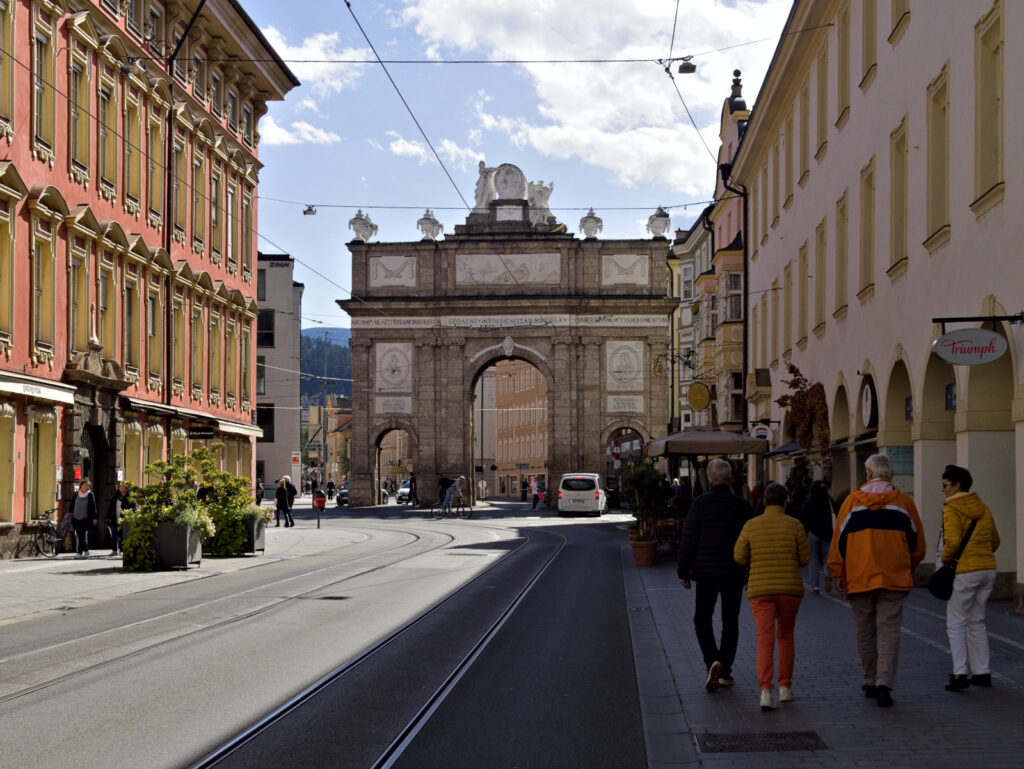
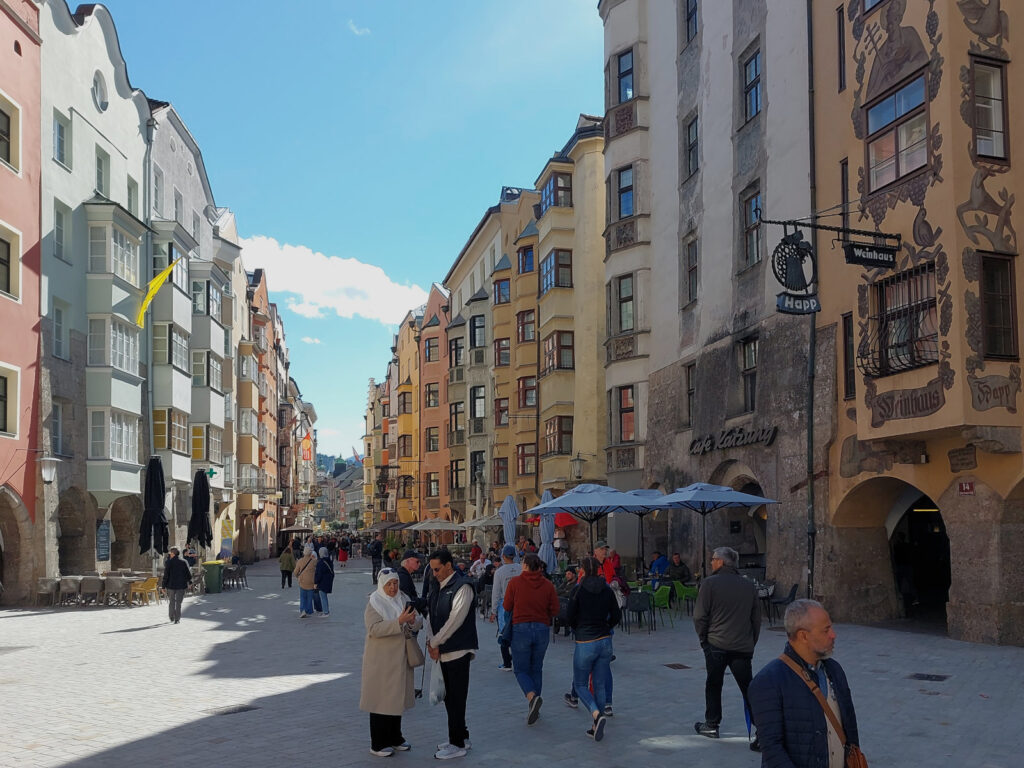
The city of Innsbruck in Austria is in a valley in the Alps mountain range where trade routes between south and north Europe have met with the routes between east and west since the ancient times. To a certain extent, this explains the rich history of Innsbruck. The old city center and views from nearby mountains are the favorite sights that visitors enjoy during their stay.
My first impression during a recent visit was that Innsbruck felt like a large and busy city, but pretty soon I realized that it is really quite compact. About 120 000 residents have found themselves a home in the city. Walking or cycling takes you to most places, and the well organized public transportation – trams and buses – take you to the rest of the sights that are too far to reach by foot.
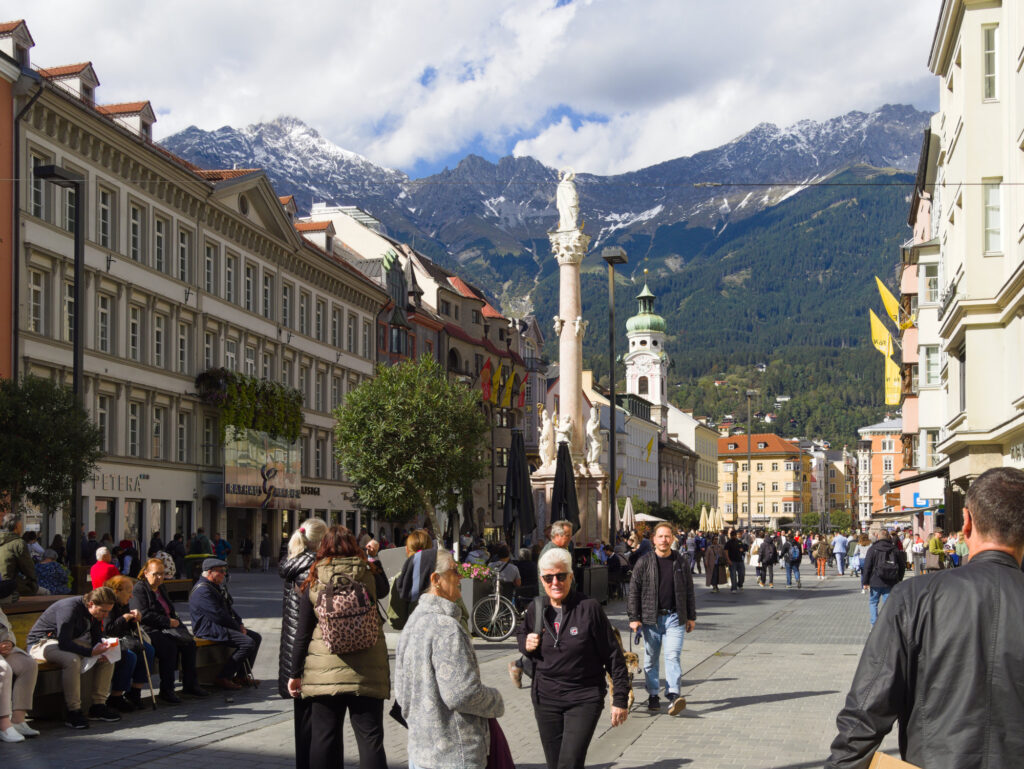
From a traveler’s point of view, Innsbruck is a wonderful base for hiking or skiing on the mountains that rise high on the north and south of the city. Both winter and summer are popular seasons to enjoy adventures in the nature. For city life, the historical center Altstadt has lots of sights worth visiting, along with restaurants and cafes where people like to spend time and enjoy the classic European town atmosphere. For travelers who are planning to only explore the city during their visit, a weekend should allow enough time to see the key sights.
A few key sights in the city:
- The entire Altstadt (old town center) district
- Maria-Theresien Strasse
- Funicular from the city to the mountain of Nordkette
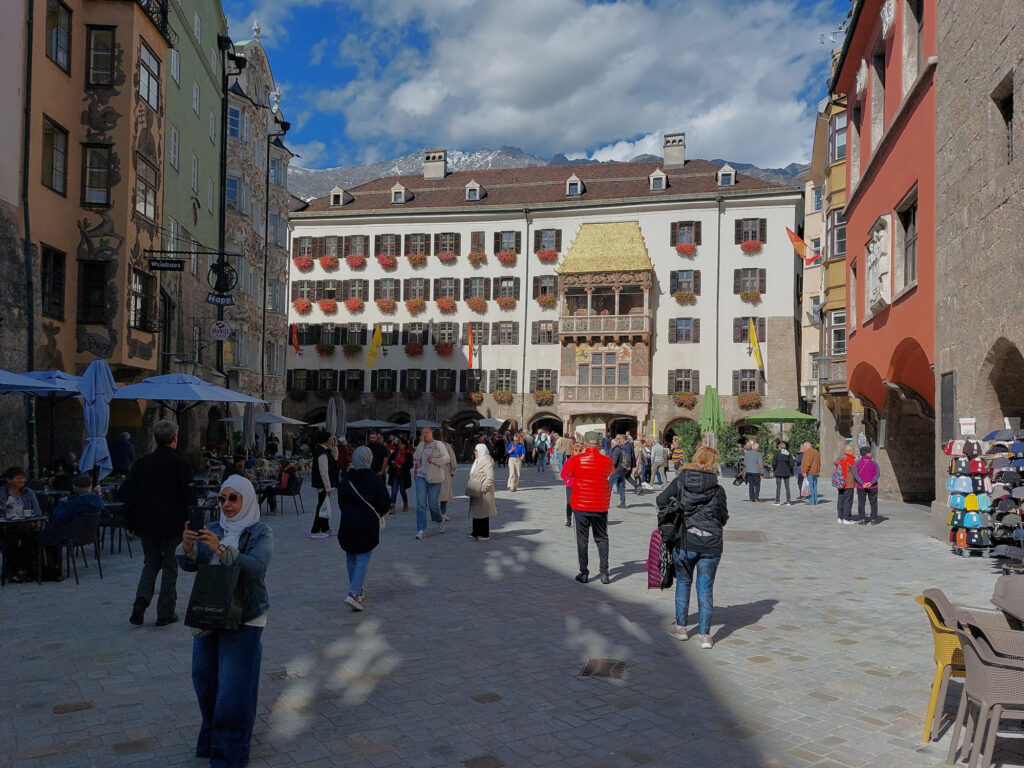
- Furstenburg house with the golden roof
- Ambras Castle
- Tyrol Panorama Museum
- Imperial Palace
- Triumphal Arch
You can view more places to visit here.
At an altitude of 578 meters, and surrounded by mountains rising up to 2500m, Innsbruck is located in a valley that has enabled connections between west (Switzerland is the western neighbor) and east, and also south to Italy via the Brenner Pass. Germany is north of Innsbruck. If you go east, you can travel across Austria, for instance, to Wien (Vienna) that you can find in the easternmost corner of the country.
Exploring Austria outside Innsbruck is easy if you want to drive or enjoy trains. Although mountains are everywhere, you can choose to tour valleys only, and explore the most charming towns and villages. The Alps are spectacular for travelers who enjoy mountain landscapes. Austria belongs to the European Union and has adopted the Euro currency. Although German is the language in Austria, English is widely spoken today as well.
Here are a few historical milestones of Innsbruck. A small market town that had built a solid bridge over a major river (bruck means bridge and Inn is the name of the river) was given the privileges of a city in 1239, starting a new era in the settlement. In 1363, the Habsburg family gained the leading role in the city. Innsbruck became the capital of Tirol province in 1420. The kingdom of Bayern (Bavaria) was annexed to Innsbruck-Tirol in 1806 by Napoleon (that was a long time ago, since today, Bayern is a German state).